Misinformation and Governance Failure
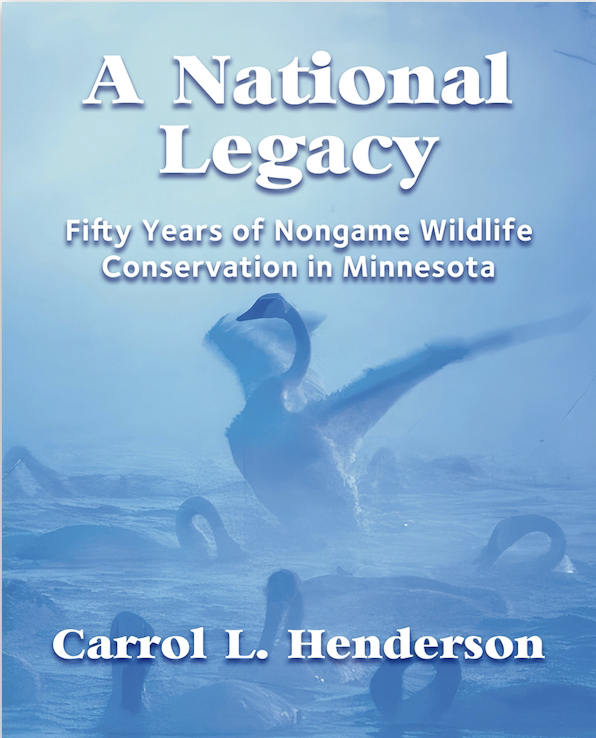
The decline of great blue heron colonies in Minnesota is not simply a story of habitat loss. It is also a story of how misinformation has shaped conservation decisions at the local level. In his new book, A National Legacy: Fifty Years of Nongame Wildlife Conservation in Minnesota, Carrol Henderson describes an Olmsted County case in which inaccurate ecological claims were used to downplay the significance of a heron colony, leading to decisions that resulted in its permanent loss.
Henderson is explicit about the mechanism at work:
“Land developers have also resorted to use of blatant misinformation about great blue heron colonies. One developer recently hired a consultant who claimed that DNR sightings of single herons in southeastern Minnesota were actually heron colonies, so he fooled the local town board into believing herons were abundant throughout the region and that herons were common.”
In the Olmsted County example, the result was a local government vote that led to the destruction of the only known heron colony in the county. Once the nesting trees were removed, the colony was abandoned the following spring.
This was not a misunderstanding of science. Instead, it was the strategic misuse of it.
Henderson also points to a deeper structural problem: federal protections under the Migratory Bird Treaty Act currently focus on birds during active nesting, not on the nesting trees and colony sites that herons rely on year after year that supports their populations. This creates a loophole in which habitat destruction can proceed legally while guaranteeing biological failure.
The lesson is uncomfortable but clear. Conservation can fail because of weak laws, but also when decision-makers accept convenient narratives instead of accurate ecological assessments. In this way, misinformation becomes as destructive as a chainsaw.